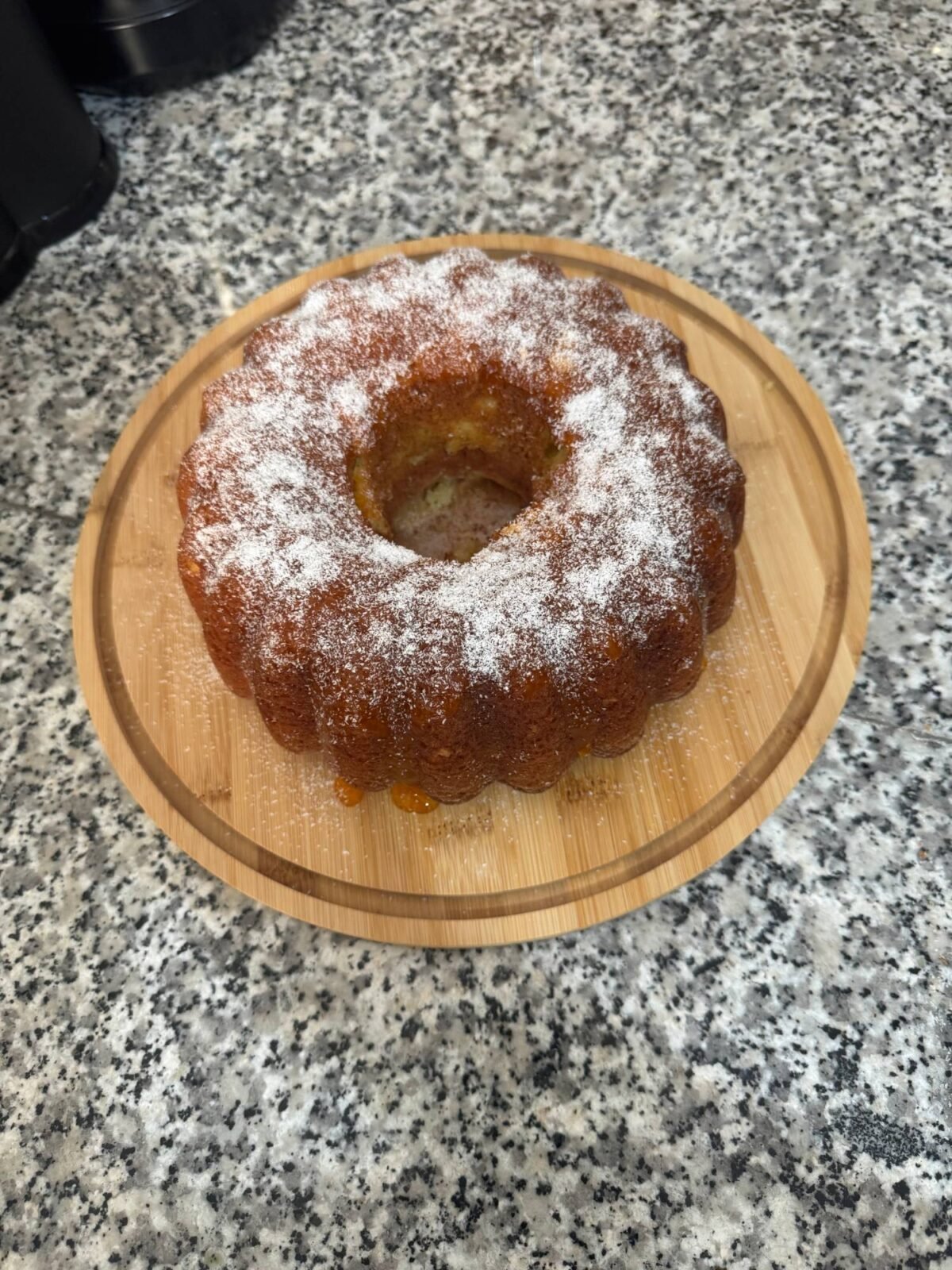
This is the cake that shows up in Moroccan kitchens on a random Tuesday afternoon, not for any special occasion — just because someone wanted cake with their afternoon tea. This Moroccan orange cake is built on fresh orange juice, orange zest, and a handful of shredded coconut, and it comes together in one bowl with a whisk. No mixer required, no layers, no fuss.
Table of contents
It’s the kind of recipe that gets handed down exactly like this — a cup of this, a cup of that, measured in a tea glass instead of a scale — and it works every single time. Here’s exactly how it’s done, with the measurements written out so you don’t need to guess.
What Makes This Cake Different
A lot of orange cakes rely on butter and a stand mixer. This one leans on oil instead, which is part of why it stays so moist for days after baking — oil-based cakes don’t dry out the way butter cakes do once they’ve cooled. The shredded coconut folded into the batter (and dusted on top) adds texture without turning this into a full coconut cake, and the splash of vinegar at the end gives the baking powder a little extra lift.
If you want to understand why acid and baking powder work together in batters like this one, this overview of baking powder covers the chemistry — but honestly, you just need to trust the process here.
Why You’ll Love This Recipe
- One bowl, one whisk — no stand mixer or special equipment needed.
- Stays moist for days thanks to the oil-based batter.
- Simple pantry ingredients — nothing you need a special trip for.
- Naturally dairy-free as written.
- Forgiving for beginners — hard to overmix, hard to mess up.
Ingredients You’ll Need
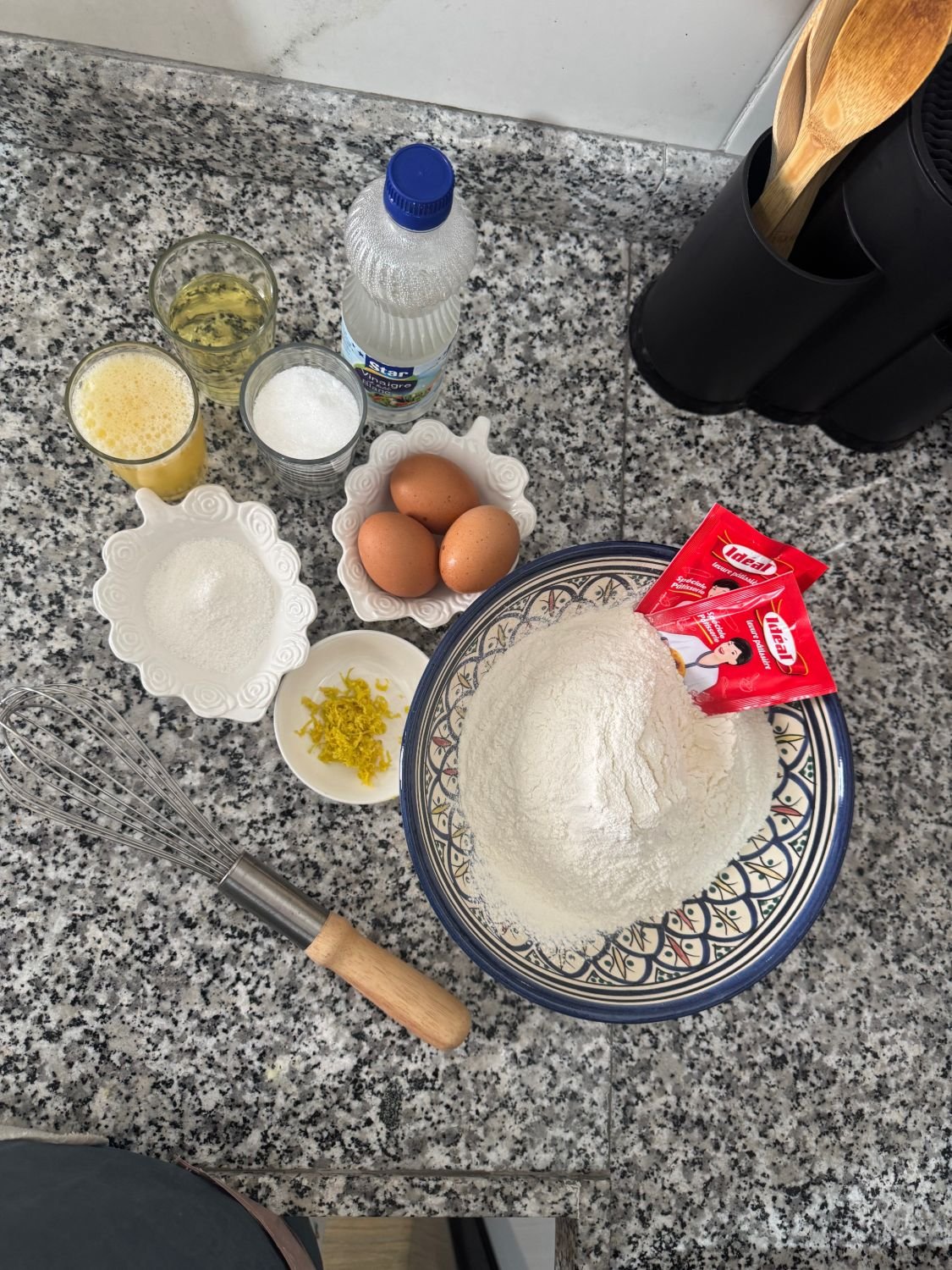
Moroccan home bakers often measure this kind of cake in a tea glass rather than a scale — about 200ml per “cup” below.
- 3 large eggs
- 1 cup (about 200g) granulated sugar
- 3/4 cup (about 180ml) vegetable oil
- 1 cup (about 240ml) orange juice, freshly squeezed
- Zest of 1 orange
- 2 tablespoons shredded coconut, plus extra for topping
- 2 sachets (8g each) baking powder
- 2 heaping cups (about 250g) all-purpose flour, good quality
- 1 teaspoon white vinegar
- A pinch of salt
- Apricot jam, for topping (optional)
How to Make Moroccan Orange Cake with Coconut
Step 1: Beat the Eggs and Sugar
In a large bowl, beat the eggs with a pinch of salt and the sugar until well combined and slightly pale. A hand whisk works fine, though an electric mixer makes it faster.
Step 2: Add the Wet Ingredients
Whisking as you go, add the oil, then the orange juice, the orange zest, and the shredded coconut. Keep whisking until everything is incorporated.
Step 3: Add the Flour Gradually
Add the flour a little at a time, whisking between additions, until you have a smooth, lump-free batter.
Step 4: Fold in the Baking Powder and Vinegar
Stir in the baking powder, then finish with the teaspoon of vinegar, mixed in last.
Step 5: Bake
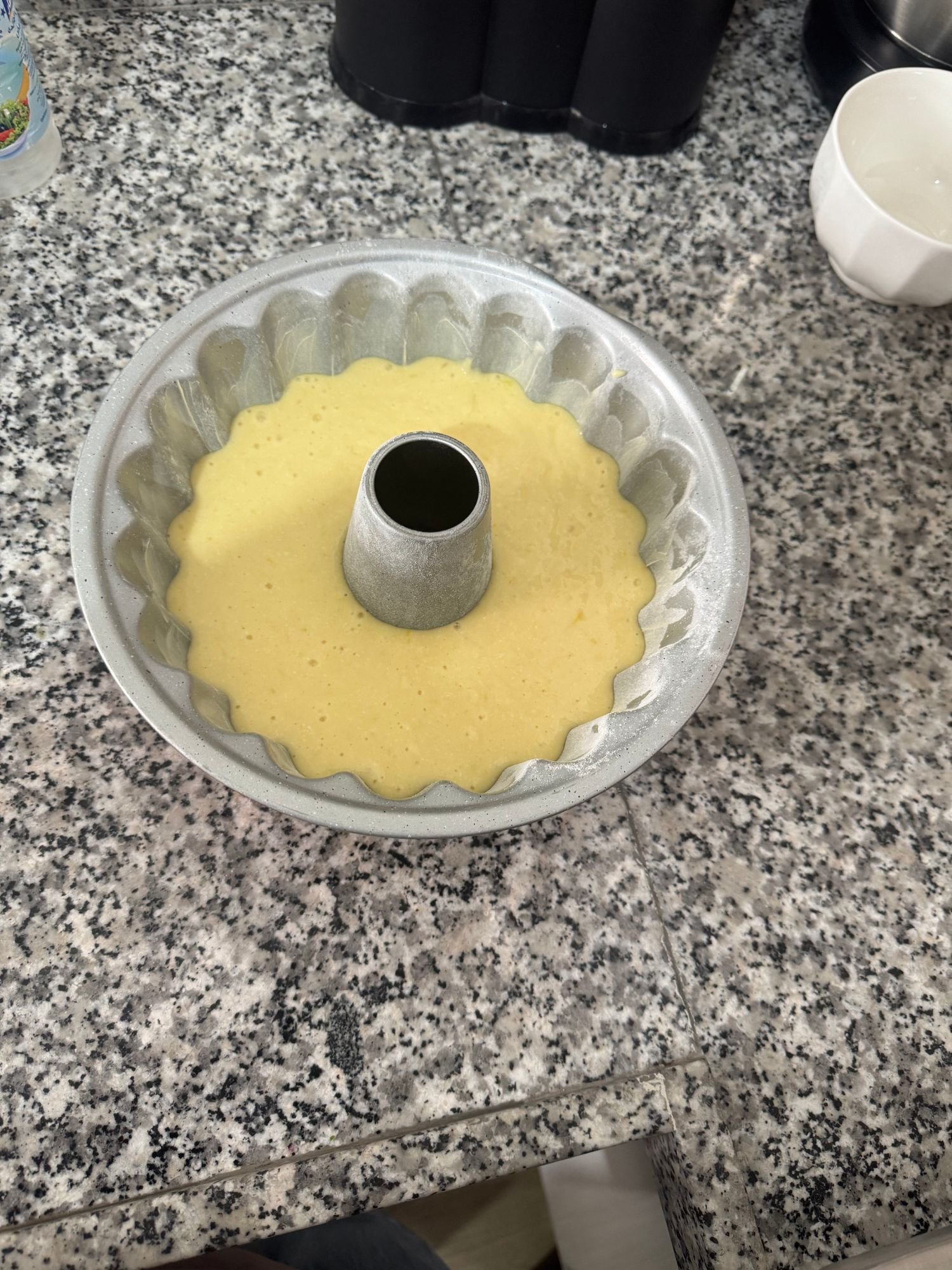
Pour the batter into a bundt or tube pan that’s been greased and lightly floured. Bake in a preheated electric oven at 180°C (350°F), with heat from both top and bottom, for 40 to 45 minutes, until a skewer inserted into the center comes out clean.
Step 6: Cool and Decorate
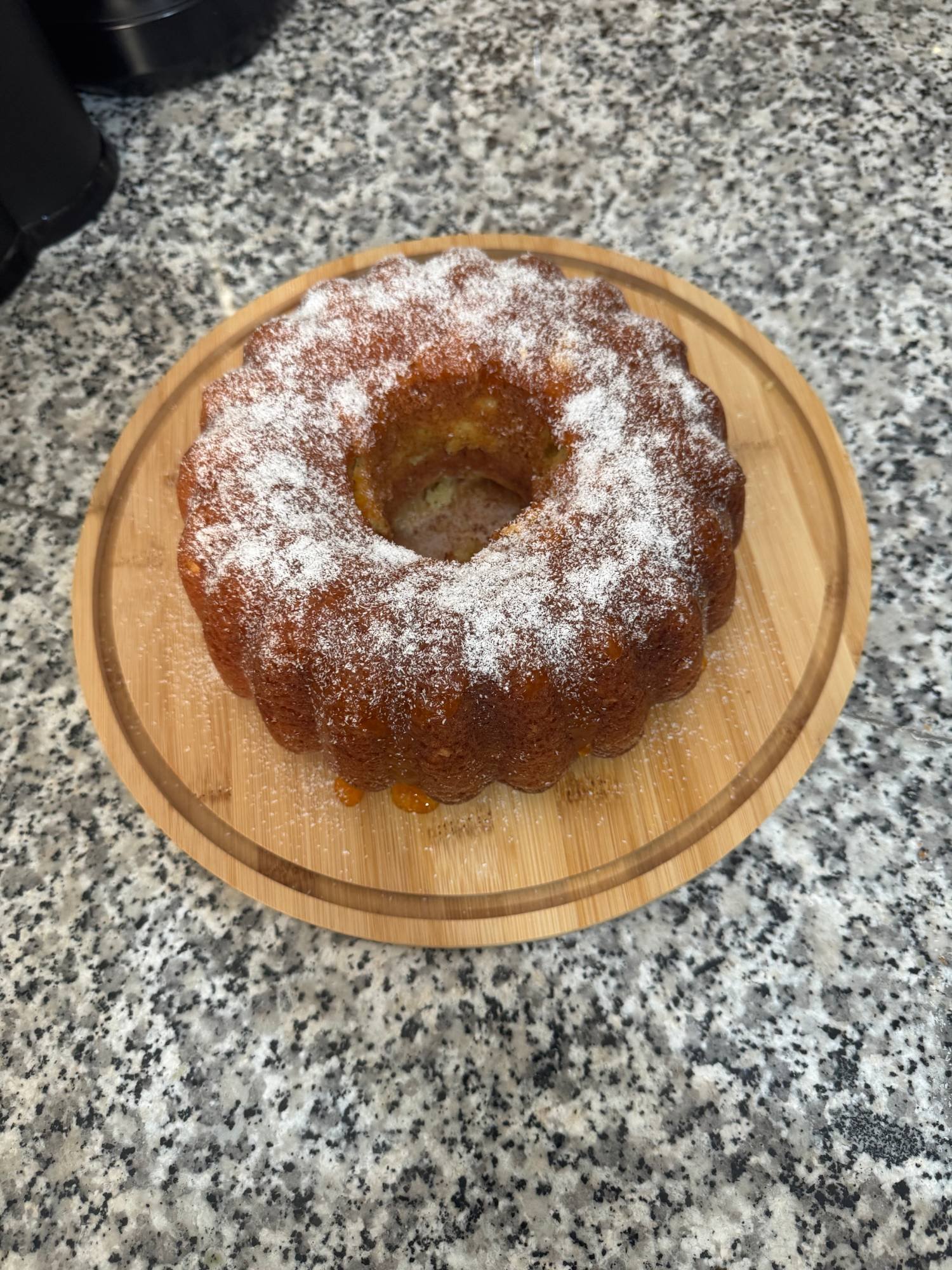
Let the cake cool in the pan for about 10 minutes before turning it out onto a rack. Decoration is entirely optional — warmed apricot jam brushed over the top, finished with a dusting of shredded coconut, is the classic way to serve it.
Tips for the Best Results
- Use room-temperature eggs — they whisk up with more volume than cold eggs straight from the fridge.
- Don’t skip greasing and flouring the pan. Bundt pans have a lot of detail for batter to stick to.
- Check at 40 minutes. Ovens vary, and a few extra minutes can be the difference between moist and dry.
- Warm the apricot jam slightly before brushing it on — it spreads much more easily.
Variations You Can Try
- Lemon version: swap the orange juice and zest for lemon for a sharper, brighter cake.
- No coconut on hand? Leave it out of the batter — the cake still works, just with a slightly different texture.
- Extra orange flavor: add a tablespoon of orange blossom water to the batter along with the juice.
What to Serve With It
This cake is built for Moroccan mint tea — slice it plain or with the apricot jam glaze, and let it sit alongside a pot of tea the way it would at home. It also holds up well as a simple dessert after a weeknight dinner, no plating required.
Frequently Asked Questions
Why does this recipe add vinegar to the batter?
The vinegar reacts with the baking powder for a bit of extra lift and helps keep the crumb light. You won’t taste it in the finished cake.
Can I use butter instead of oil?
You can, but the texture will change — oil keeps this Moroccan orange cake moist for several days, while butter gives a slightly denser, more traditional “cake” crumb that dries out a bit faster.
Do I need a bundt pan specifically?
No — a regular tube pan or even a standard loaf pan works, though baking time may need adjusting slightly for a different shape.
Can I skip the coconut?
Yes, it’s easy to leave out of the batter if you’re not a fan, though it does add a nice texture against the soft crumb.
Can I use bottled orange juice instead of fresh?
Fresh juice gives the best flavor and the zest is doing a lot of the work here, but bottled juice works in a pinch.
How should I store this cake?
Keep it covered at room temperature for up to 3 days, or in the fridge for up to a week. It also freezes well, unglazed, for up to 2 months.
Why is my cake dense instead of light?
This usually means the baking powder was old or the batter was overmixed after the flour went in. Mix just until smooth, and check that your baking powder is fresh.
Bake This Cake This Week
If you’ve been looking for a cake that doesn’t need a mixer, special pans, or a trip to a specialty store, this is it — just a bowl, a whisk, and about 45 minutes in the oven. Make it this week and let me know in the comments how it turned out, and for more easy desserts like this one, take a look at our other dessert recipes.
Moroccan Orange Cake with Coconut
Ingredients
Method
- In a large bowl, beat the eggs with a pinch of salt and the sugar until well combined and slightly pale.
- Whisking as you go, add the oil, then the orange juice, orange zest, and shredded coconut.
- Add the flour a little at a time, whisking between additions, until you have a smooth, lump-free batter.
- Stir in the baking powder, then finish with the vinegar, mixed in last.
- Pour the batter into a greased and lightly floured bundt pan.
- Bake in a preheated electric oven at 180°C (350°F), heat from top and bottom, for 40 to 45 minutes, until a skewer comes out clean.
- Let the cake cool in the pan for about 10 minutes before turning it out onto a rack.
- Decorate with warmed apricot jam and a dusting of shredded coconut, if desired.